
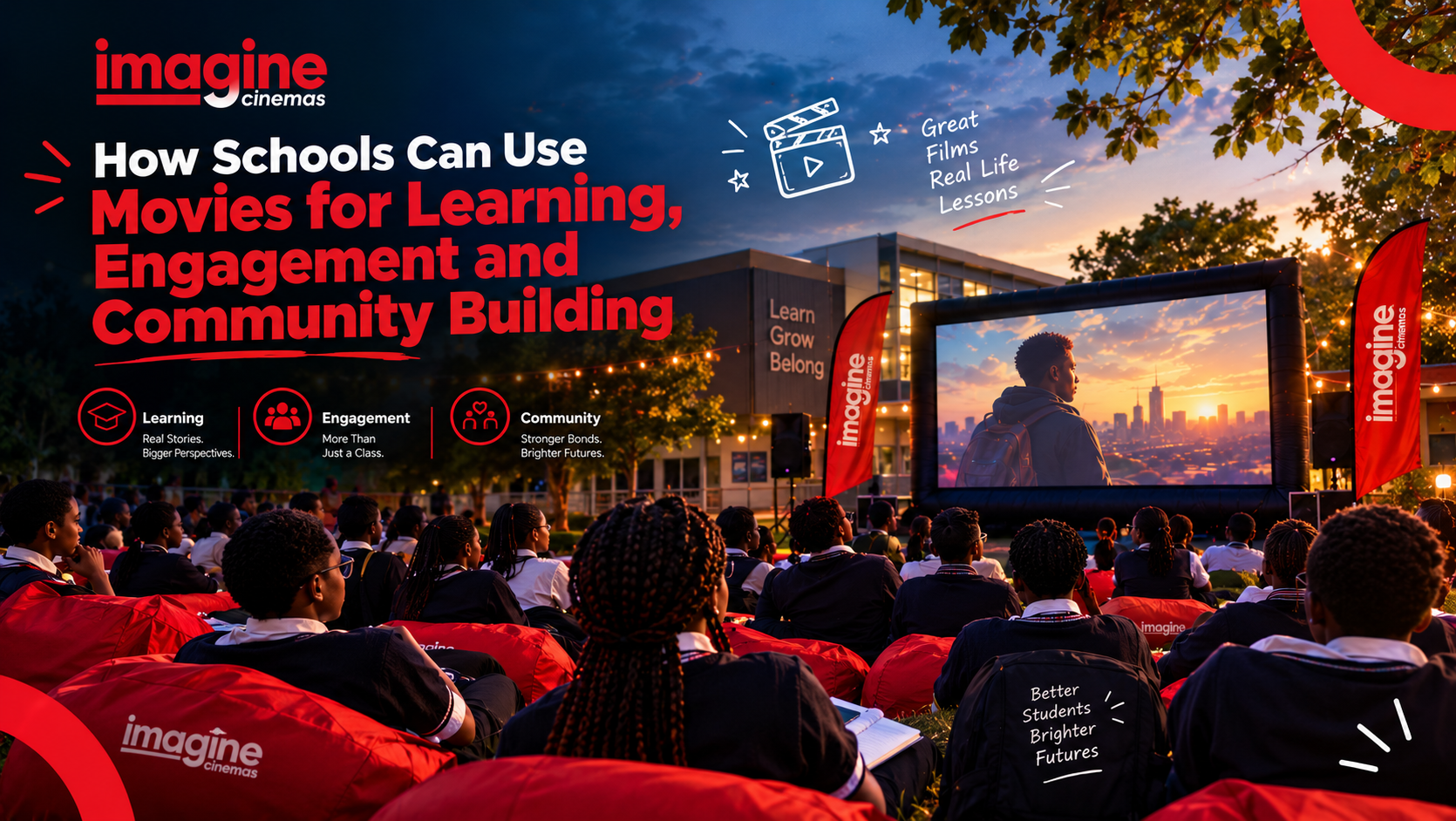
Movies for learning work when the film, the goal and the follow-up are planned together. A film shown with no purpose is a break from class. A film chosen for a lesson, followed by good questions, becomes a learning tool students remember.
For Nigerian schools, this matters. Students are used to screens, but not always to watching with intent. A well-run screening gives them a shared story to discuss, question and connect to what they study.
This guide shows how school owners, teachers and event coordinators can use film to support learning, build school spirit and bring parents closer to the school. It also covers how to plan a screening that runs smoothly, from power to sound to supervision.
Make Classroom Lessons More Engaging
Some ideas are hard to picture from a textbook. A film can make them visible.
A documentary on the transatlantic slave trade can give history students context that a paragraph cannot. A science film on the water cycle or renewable energy can show a process in motion. A film set in another culture can open up a geography or social studies lesson.
Match the film to the lesson
Start with the learning objective, not the movie. Ask what students should understand after watching. Then pick a film, or a clip, that supports it.
You do not always need a full feature. A 20-minute segment with a clear task often works better than two hours of passive viewing.
Encourage Discussion and Critical Thinking
The real learning happens after the screen goes dark.
Give students questions before the film starts, so they watch with a purpose. Afterwards, use the film as a starting point for discussion, debate or writing.
Some simple formats teachers can use:
- Think and share: students write a short reflection, then discuss in pairs.
- Class debate: split the class to argue for and against a decision a character made.
- Creative task: students write an alternative ending or a letter to a character.
- Link to the syllabus: students list three ideas from the film that connect to a current topic.
These tasks turn watching into thinking. They also give quieter students a way to take part.
Teach Values Through Stories
Stories are one of the oldest ways we teach values. Film continues that tradition.
Age-appropriate films can open conversations about teamwork, empathy, responsibility, courage, honesty and inclusion. Students often talk more freely about a character’s choices than about their own.
For younger pupils, animated films with clear moral choices work well. For senior secondary students, films with harder questions can support discussion on leadership, peer pressure and integrity.
One caution: preview every film. Check language, themes and tone against the age group and your school’s values before it reaches the hall.
Create Memorable School Events
Not every screening needs to be tied to a lesson. Some of the best uses of film are school events.
Ideas worth considering:
- End-of-term screening: a reward for students after exams.
- Cultural day: films that celebrate Nigerian and African heritage.
- Orientation week: a relaxed way for new students to meet each other.
- Graduation or farewell night: a screening with a slideshow of the school year.
- Holiday or festive event: a family-friendly film for the school community.
- Inter-house or club activity: a film night run by a student club, with a discussion afterwards.
These events give students something to look forward to. They also build school spirit in a way that is easy to plan and easy to repeat each term.
Bring Students, Teachers and Parents Together
Schools often struggle to get parents involved outside PTA meetings and result days. A family movie night offers a lighter reason to visit.
Parents sit with their children, teachers meet families in a relaxed setting, and the school feels more like a community than an institution. Add a short welcome from the principal and a few announcements, and the screening doubles as a school engagement event.
This works well for private schools and for community-linked schools, especially when the event is free or low-cost for families.
Take Learning Beyond the Classroom
A screening does not have to happen in a classroom. Moving it outdoors changes the mood completely.
A school field, courtyard or assembly ground can become a cinema for the evening. Themed film days, such as a science week or a heritage week, can build a whole programme around a few well-chosen screenings.
Outdoor events need more planning for light, sound and weather. They also feel more special. Students remember an evening under the sky long after they forget an ordinary school day. For more ideas, see our guide to outdoor movie screenings.
How to Plan a Successful School Movie Screening
Good planning is what separates a smooth screening from a stressful one. Work through these points early.
1. Set the goal. Is this for learning, for celebration or for community? The goal decides the film and the format.
2. Choose age-appropriate content. Check ratings, but also watch the film yourself. Ratings do not always match your school’s standards.
3. Sort out screening rights. Showing a film to a group is different from watching at home. Public and institutional screenings usually need permission from the rights holder or distributor. Confirm this before you announce the event.
4. Pick the right venue. A school hall is easier to control. A field offers more space but needs more preparation. Think about daylight too: a hall with open windows will wash out the picture in the afternoon.
5. Plan for power. Power is the first thing that can stop a Nigerian event. Make sure there is a backup, such as a generator or inverter, and that someone is responsible for it.
6. Get the sound right. A large space needs proper speakers, not a laptop speaker. Poor sound is the quickest way to lose a room full of students.
7. Arrange supervision. Assign teachers to sections of the audience. Plan entry, seating and exit, especially for younger students.
8. Think about accessibility. Allow space for students with mobility needs, and consider subtitles so every student can follow.
9. Prepare the follow-up. Have discussion questions or a short task ready. This is what makes the screening a learning activity.
Common mistakes
- Choosing a film because it is popular, not because it fits the goal.
- Having no backup power.
- Testing the equipment only when students are already seated.
- Skipping the discussion afterwards.
- Leaving permissions until the last week.
How Imagine Cinemas Supports School Cinema Events
Imagine Cinemas is a Lagos-based mobile cinema company. We bring the cinema to you: screen, projection, sound and the people to run it. Our belief is simple: every community deserves a world-class screen.
We have delivered 500+ cinema experiences across Nigeria, including campus screenings at institutions such as Babcock, UI, OAU, FUNAAB, UNILORIN and ABUAD. A school hall, courtyard or sports field can work the same way.
For schools, that means you can focus on the learning and the event. We handle the setup, the equipment and the technical side of the screening.
If you want to see how this works in practice, read our guide to mobile cinema experiences. If your audience is older students, our post on planning a campus movie night has useful ideas too.
Frequently Asked Questions
Do schools need permission to screen a film?
Usually, yes. A screening for a group is generally treated differently from private viewing, so rights holders or distributors often need to approve it. Check early, and keep the permission in writing.
What kinds of movies work best for learning?
Films and documentaries that connect to your curriculum or to a value you want to teach. Pick content with a clear theme, then plan questions around it. Always watch the film first.
How do I choose a film for different age groups?
Match the themes, language and pace to the age of the students. Younger pupils do well with animation and clear stories. Senior students can handle films with more complex themes, as long as you prepare the discussion.
Can a school screening take place in a hall or on a field?
Both can work. A hall gives you control over light and sound. A field gives you space and atmosphere but needs more preparation for power, weather and crowd management.
What equipment does a school screening need?
A projector or large screen, a proper sound system, reliable power with a backup, and seating. A mobile cinema provider can bring all of this and set it up for you.
How far ahead should a school plan a screening?
Start at least a few weeks ahead. You need time to choose the film, confirm permissions, brief staff and inform parents. Larger events, such as outdoor family nights, need longer.
Plan a School Cinema Experience
Whether you want a learning screening, an end-of-term celebration or a family movie night, we can help you plan it from film choice to setup.
Plan a School Cinema Experience: tell us your school, your date and your goal, and we will send a proposal.