From Screening to Experience
Think about the last event you really enjoyed. Chances are, it wasn’t just one thing that made it memorable. It might have been the people you were with, the atmosphere, the food, the music or an unexpected moment that made everyone laugh.
A great mobile cinema event works the same way.
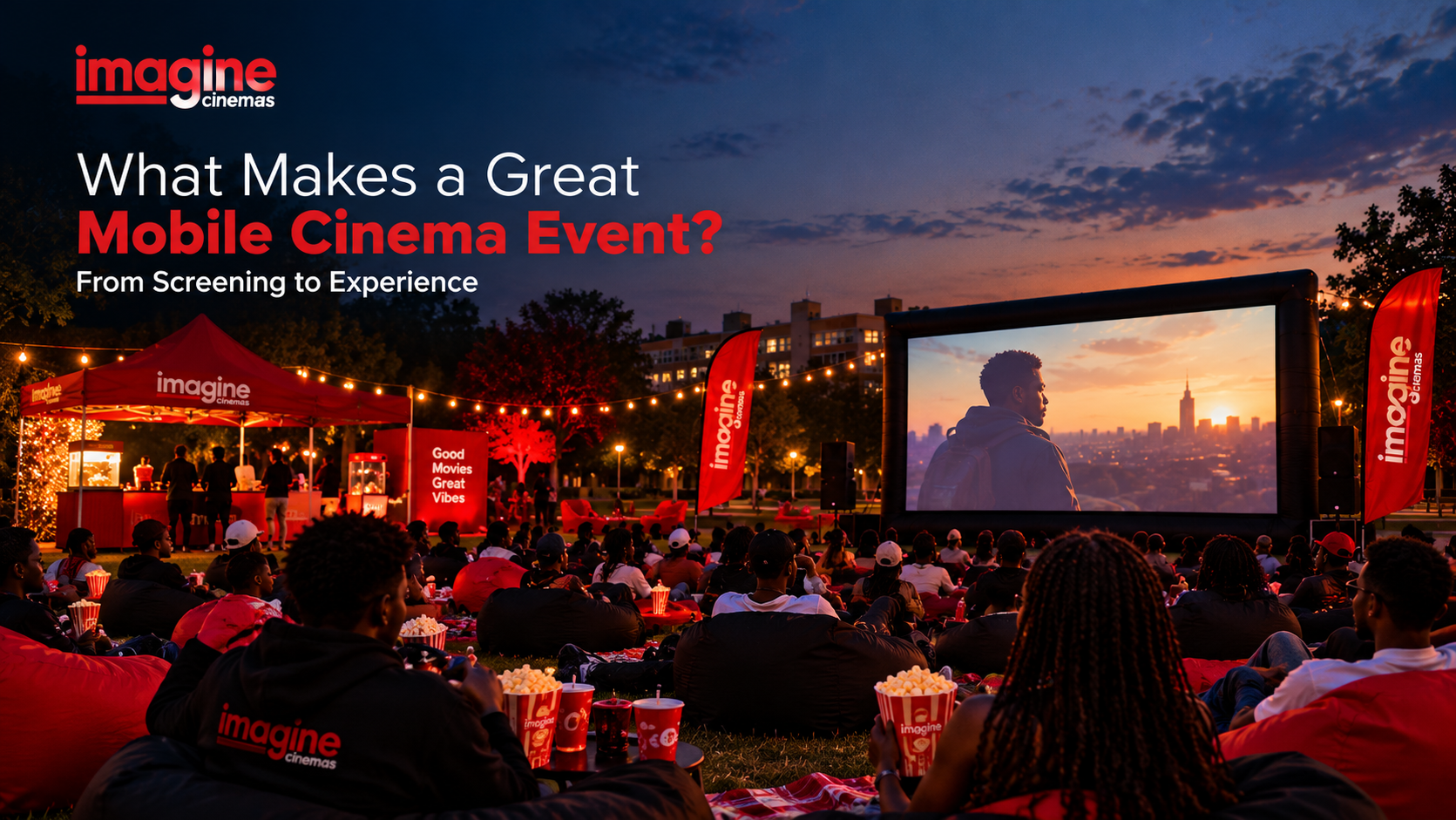
Putting up a screen and playing a film is one thing. Creating an experience people enjoy from the moment they arrive until they leave is another. Imagine watching a film outdoors with friends, enjoying a campus screening after a busy week of lectures, or ending a corporate event with a private cinema experience. The film matters, but so does everything happening around it.
That is what makes mobile cinema special. It brings the cinema experience to people, wherever they gather, and gives an ordinary location a new purpose.

But what separates a good screening from an event people will want to attend again? Here are six things that make the difference.
1. Start With the People Coming to Watch

Before choosing a film or booking a venue, think about your audience. Who are you bringing together, and what would make the event enjoyable for them?
University students might appreciate a relaxed evening with a popular comedy, music and friends. A family screening needs a different approach, while a corporate event may call for a more private and carefully planned atmosphere.
These differences should shape your decisions, from the film and screening time to the activities you organise before the movie begins.
For brands, understanding the audience is especially important. A screening designed for university students should feel different from one created for customers, business partners or employees. When the experience fits the people attending, it feels thoughtful rather than generic.
2. Choose a Location That Adds to the Experience
One of the best things about mobile cinema is that you are not limited to a traditional cinema building.
A university field can become a place for students to unwind after lectures. A hotel or outdoor lounge can offer guests something different from the usual evening entertainment. A community space can bring neighbours together for a shared experience, while a corporate venue can become the setting for a private screening.
The location itself can help make the event memorable. But it also needs to work.
Is there enough room for the audience? Can everyone see the screen clearly? Is there a reliable power supply? Will the sound carry properly across the space? For outdoor events, have you considered lighting, security and what happens if the weather changes?
A beautiful location is a good starting point. The real job is making sure it is also suitable for the screening.
3. Make the Experience Enjoyable Before the Film Starts
Imagine arriving at a movie night only to spend the next 45 minutes standing around, wondering when the film will begin. Even a great movie may struggle to make up for that first impression.
The experience should start before the opening scene.
Depending on the audience and the type of event, you could have music playing, food available, simple games, photo opportunities or a short welcome from the organisers. These details help people settle in, interact with one another and enjoy the atmosphere while they wait.
For a brand activation, the time before the screening can also create opportunities for meaningful engagement. Guests might explore a product, take part in an activity or interact with a sponsor.
The important thing is to make these activities feel like a natural part of the event. People should have something to enjoy, not feel as though they have arrived at an advertisement disguised as a movie night.
4. Get the Sound and Picture Right
People may not notice every detail of a good technical setup, but they will certainly notice when something goes wrong.
A projector that struggles to produce a clear picture, speakers that cannot reach the back of the audience or an unexpected power failure can quickly take the enjoyment out of a screening.
That is why the equipment must suit the venue and the size of the crowd. Screen dimensions, projector brightness, sound coverage, equipment positioning and power requirements all need to be considered before the event begins.
Testing everything in advance is equally important. It gives the technical team time to identify problems and make adjustments before guests arrive.
When the setup is right, people can focus on the film, enjoy the atmosphere and forget about the technical work happening behind the scenes. That is exactly what you want.
5. Give People Room to Relax and Enjoy Themselves

Comfort might not be the first thing that comes to mind when planning a cinema event, but it can shape the entire evening.
Think about how people will sit, how they will move around the venue and whether they can easily access food, drinks and other facilities. Consider the temperature, lighting and the amount of space available, particularly for outdoor screenings.
You do not necessarily need an elaborate setup. Sometimes, well-arranged seating, a clear entrance, accessible refreshments and enough room for people to settle in can make all the difference.
The details will depend on the event. A casual campus movie night may have a relaxed arrangement, while a private corporate screening might call for a more refined setting.
Whatever the format, the aim is the same: make it easy for people to feel comfortable and enjoy the experience.
6. Create Moments People Will Want to Remember

The film might bring people to the event, but the experience around it can give them something to talk about afterwards.
It could be a themed setup, a photo area, a surprise performance, a fun activity or the simple pleasure of watching a film somewhere unexpected with people they enjoy spending time with.
For brands, this creates an opportunity to connect with audiences in a more engaging way. Rather than placing a logo beside a screen and hoping people notice it, a brand can become part of the wider experience through product displays, interactive activities, giveaways or other relevant touches.
Imagine a product launch where guests can discover the product, enjoy the event with friends and finish the evening watching a film together. The brand is no longer just another message competing for attention. It becomes part of an experience people can associate with the occasion.
Of course, memorable moments do not happen by accident. They come from understanding the audience and planning details that make sense for the event.
Bringing It All Together
A great mobile cinema event is rarely the result of one big idea. It is usually a combination of thoughtful decisions.
The film suits the audience. The location works. The sound and picture are clear. People are comfortable, the programme runs smoothly, and there is enough happening around the screening to make the occasion feel special.
Get these things right, and you give people a reason to remember the event long after the credits roll.
That is the real value of mobile cinema. It is not simply about watching a film outside a traditional theatre. It is about bringing people together in a setting that makes the experience feel different.
How Imagine Cinemas Helps Bring the Experience to Life
At Imagine Cinemas, we bring cinema to campuses, communities, corporate venues, private gatherings, outdoor locations and brand activations.
We understand that every event has a different audience and purpose. A campus screening designed to help students unwind will have different needs from a corporate event or a brand activation focused on audience engagement.
That is why the planning matters just as much as the screening itself. From the cinema equipment and technical setup to the wider event experience, we help organisers create screenings suited to their venue, audience and objectives.
Whether you are planning a student event, bringing a community together, organising a private screening or looking for a distinctive way to engage customers, we can help you explore the possibilities.
Planning a mobile cinema event? Talk to Imagine Cinemas about creating an experience your audience will enjoy, remember and want to experience again.